
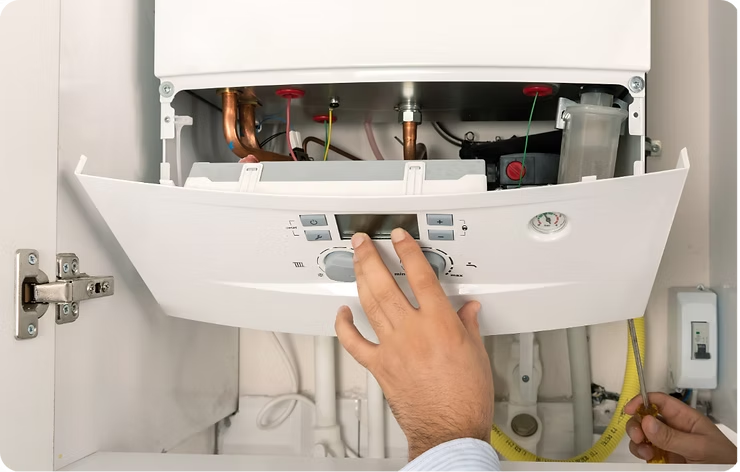
Refilling a central heating boiler, how should this be done?
 Thom Nierop
The alarm goes off at 7 o'clock, the day begins! You step into the shower to wake up, but after waiting a few minutes, the water is still ice cold. You walk to the central heating boiler and the gauge is at about 0. The boiler is empty, what a morning! How do you make sure you can shower warm again tomorrow?
Preparation is everything
To be well prepared to perform the task, it's good to first have all the supplies at home.
- A bucket to catch the water that doesn't go into the central heating boiler so your floor stays dry.
- A cloth that you can use to remove/absorb extra water.
- A hose that you can connect to the water tap. Note: always handy to first check where the nearest tap is. You'll be disappointed if it turns out your hose is too short.
- A water pump pliers is always handy to make connecting the fill hose a bit easier.
When you have all the supplies at home, it's important to get the central heating boiler ready to refill. Set your thermostat to a low setting and then wait about a quarter of an hour so the boiler is a bit less warm. After this, the question is, do you have an analog boiler or one with a digital pressure gauge? With an analog one, you simply unplug it from the socket, otherwise you need to read the user manual on how to access the refill program of the boiler.
Easy refilling
Now everything is ready to actually refill the boiler:
- Find a tap that's near the boiler and connect the fill hose.
- Let the hose fill with water. When it's filled, close the tap again.
- Connect the hose with water to the fill tap of your boiler.
- When the hose is connected, first turn on the water tap and then the fill tap.
- Look at the pressure gauge and wait until between 1.5 and 2 bar is indicated. If this is the case, first close the fill tap of the boiler and then the water tap.
- Now remove the fill hose from the boiler and keep your bucket and cloth handy to catch any remaining water.
- Do you have an analog boiler? Now that the central heating boiler is refilled, you can plug it back into the socket with peace of mind.
Want to do something extra after refilling for better results? Then it's still possible to bleed the radiators.
What else should I pay attention to?
- If you've refilled the central heating boiler and you see that the pressure rises very quickly? This could mean there's something wrong with the expansion vessel. When this is the case, you should have a plumber come. Continuing to use the boiler will only make the problem worse.
- You have to refill the boiler very often and the pressure rises irregularly as in the previous point. Then it could be that there's something wrong with the automatic air vent of the boiler. The air vent could be leaking, for example, but due to the heat of the boiler, the water evaporates immediately. You can sometimes see traces of this problem through limescale on the air vent.
- Does the fill point and the pressure gauge differ in height? This will cause the pressure gauge to give a value that's not entirely correct. So the pressure gauge will show approximately 0.1 bar extra pressure for every meter of height difference.
Do you have trouble with an (almost) empty central heating boiler or don't you have the hang of refilling? Download the Helprr app for iOS or Android and easily post your task!
You've posted a task but you're not getting the responses you want. What can you do about this? Then also read this blog for future success!